
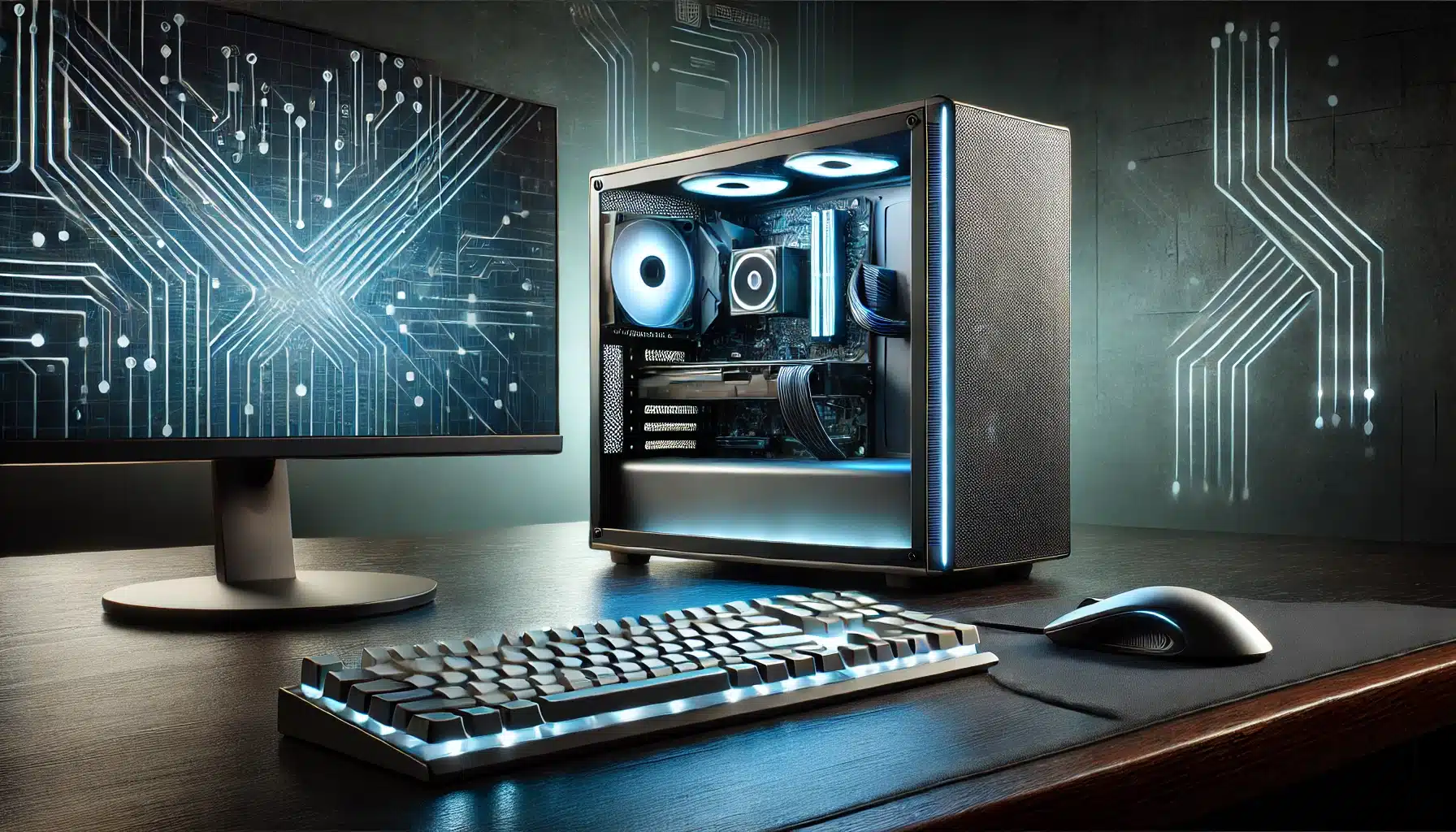
Building a gaming PC can be an exciting yet challenging task, especially when you’re working with a compact form factor. This guide explores the process of creating a small yet powerful gaming rig using AMD’s latest APU (Accelerated Processing Unit), perfect for 1080p gaming without the need for a separate graphics card. The build leverages the compact design, integrated graphics capabilities, and advanced technology such as AMD’s FSR (FidelityFX Super Resolution) to achieve outstanding gaming performance.
Why Go Compact? The Small Form Factor Advantage
Ever want to build your own gaming arcade machine? Check out our huge selection of cabinet kits.
Small form factor (SFF) PCs are gaining popularity due to their portability, space-saving design, and sleek aesthetics. A compact PC build offers a minimalistic look while still packing enough power for various tasks, including gaming, content creation, and everyday computing. With the development of more efficient components, SFF PCs can now deliver near-desktop performance, making them ideal for those who want a high-performance gaming experience without the bulk of a full-sized tower.
Key Components of the Build
In this compact build, selecting the right components is crucial for ensuring balanced performance and thermal management. Here’s a breakdown of the key components used:
Motherboard: ASRock A620I Mini-ITX
The ASRock A620I Mini-ITX motherboard was chosen for its small size and affordability. It provides the essential features needed for gaming and is designed to fit in compact cases without sacrificing connectivity options. Despite its tiny footprint, it supports the latest AMD processors and high-speed RAM, making it an excellent choice for this build.
Storage: SK Hynix Platinum P41 SSD (2TB, PCIe 4.0)

See current deal on Amazon.
For storage, this build uses the SK Hynix Platinum P41 SSD, which offers a generous 2TB capacity. This PCIe 4.0 SSD delivers outstanding performance, with read speeds of 7,000 MB/s and write speeds of 6,500 MB/s. Its compatibility with both PCIe 3.0 and 4.0 ensures that it can be used in various setups while maximizing data transfer rates, speeding up game load times and system responsiveness.
APU: AMD R7 8700G

See current deal on Amazon.
The star of this build is the AMD R7 8700G APU, featuring RDNA 3 Graphics (780M) and a robust 8-core, 16-thread CPU. This APU is paired with 32GB of Kingston Fury DDR5 RAM running at a blistering 8,000 MHz, which optimizes the performance of the integrated graphics unit. The result is a powerful combination that can handle 1080p gaming without the need for a dedicated graphics card, making it an ideal choice for compact builds.
Cooling: Thermalright X53 Low-Profile Cooler

See deal on Amazon.
Cooling is a significant concern in small form factor gaming PC build. The Thermalright X53 Low-Profile Cooler is an excellent fit for this build. It features a 90mm fan and stands at just 53mm tall, perfect for cramped cases. This cooler was chosen over the bulkier Wraith Spire cooler to ensure adequate clearance within the case while still providing efficient heat dissipation.
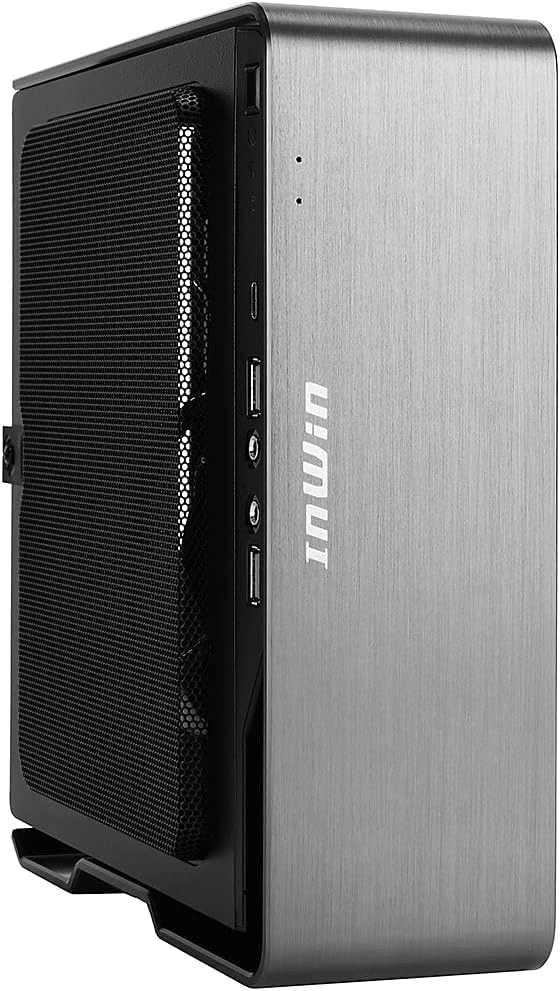
Case: InWin Chopin Max
See deal on Amazon.
The InWin Chopin Max case was selected for its ultra-compact 3.3-liter size. It comes with a pre-installed 200W power supply, which is sufficient for this APU-based system. Despite its small size, it offers space for two 2.5-inch drives, allowing for additional storage options. Its minimalist design and portability make it an appealing choice for those looking to build a compact yet powerful gaming PC.
Building and Performance Overview
Assembling the PC was straightforward. After the hardware was installed, the system was configured to allocate 8GB of system RAM to the integrated GPU (iGPU), optimizing its performance in games.
Power and Cooling: The APU’s power usage was set to 80-85W to strike a balance between performance and temperature management within the small case. During gaming, CPU temperatures averaged around 68°C, peaking at 82°C during more intense stress testing. The low-profile cooler performed admirably, keeping the system within safe operating temperatures.
Benchmark Performance
Several benchmarks were run to assess the build’s performance. Here’s how the system fared:
- SK Hynix Platinum P41 SSD: Achieved read speeds of over 7,000 MB/s and write speeds of over 6,500 MB/s, delivering rapid data access and significantly reducing game load times.
- Geekbench 6: Scored 2,790 in single-core and 14,532 in multi-core tests, highlighting the APU’s capability to handle demanding tasks.
- 3DMark Night Raid: Scored 34,653 for the integrated GPU, demonstrating the strength of AMD’s latest RDNA 3 graphics architecture.
Gaming Performance Tests
This build was put to the test with several popular games to gauge its real-world performance:
- Call of Duty Modern Warfare 3: Running at 1080p with FSR set to balanced, the game achieved an average of 130 FPS, with 1% lows of 74 FPS, showcasing smooth gameplay.
- Forza Horizon 5: At 1080p with medium settings (no FSR), the game averaged 98 FPS. Enabling FSR pushed the frame rates closer to 120 FPS, illustrating the APU’s ability to handle demanding titles at high frame rates.
- Fallout 4: Ran at a steady 60 FPS on 1080p high settings. With a 120Hz monitor, the build could potentially deliver even higher frame rates.
Some graphically intensive games like Horizon Forbidden West and Cyberpunk 2077 presented challenges, mainly due to their high graphical demands and driver limitations. However, with some tweaks to settings, they remain playable, highlighting the versatility of this compact gaming build.
Power Consumption
The system’s power consumption remained within a reasonable range:
- Idle: 26W
- Gaming: Averaged around 126W from the wall, demonstrating the efficiency of the APU in delivering solid performance without excessive power draw.
Final Thoughts
This small form factor gaming PC build delivers impressive 1080p gaming performance, all packed into a tiny 3.3-liter case. While some of the latest, more graphically demanding games may require settings adjustments, the system provides a smooth and enjoyable gaming experience overall. With AMD’s advanced integrated graphics and technologies like FSR, compact PCs can now offer robust performance without the need for discrete GPUs.