
The HyperBase Mini Review is a plug-and-play USB drive, marketed as containing an enormous library of 43,000 games, running on the Batocera 35 system. Priced at $40 on Amazon, the drive has piqued the interest of retro gaming enthusiasts, offering a seemingly hassle-free gaming solution. In this review, we’ll break down the key features, assess its value, and see if it’s a worthwhile investment. See it on Amazon here.
Initial Impressions and Setup
The HyperBase Mini Review USB drive arrives in minimal packaging, with the only branding appearing on the drive itself. For $40, the device claims to provide thousands of retro games, an impressive proposition if it delivers on its promise. However, there’s an underlying skepticism about the legality and authenticity of these games.
For testing, the drive was plugged into a SER 7 mini PC. To access the Batocera system, the PC must be booted from the USB drive via the BIOS. On the initial test, the drive’s pre-installed Batocera 35 failed to boot. This issue was resolved by updating the system to Batocera 37, which involved deleting a large PS3 game to make room, highlighting an early problem with the drive—limited storage space.
Customizing and Exploring the Drive
Once set up, the drive opens into a user interface based on the Carbon theme, a common UI in retro gaming. Each gaming system within Batocera displays its logo and available game library, complete with box art. However, some systems lack artwork or logos, giving an inconsistent presentation.
The drive boasts a vast number of ROMs, with certain consoles like the Game Boy featuring full libraries. Others, however, seem to have just one or two games, which gives the impression of padding the system count rather than providing a robust selection. Despite this padding, the collection includes a mixture of well-known classics and obscure titles, with many libraries missing fan-favorite games.
Customizing the interface is possible, as Batocera allows for different themes and artwork changes. This flexibility is a positive aspect, offering users the chance to make the gaming experience feel more personal. However, the fact that some systems are underrepresented may leave enthusiasts feeling a bit short-changed.
Compatibility and Performance
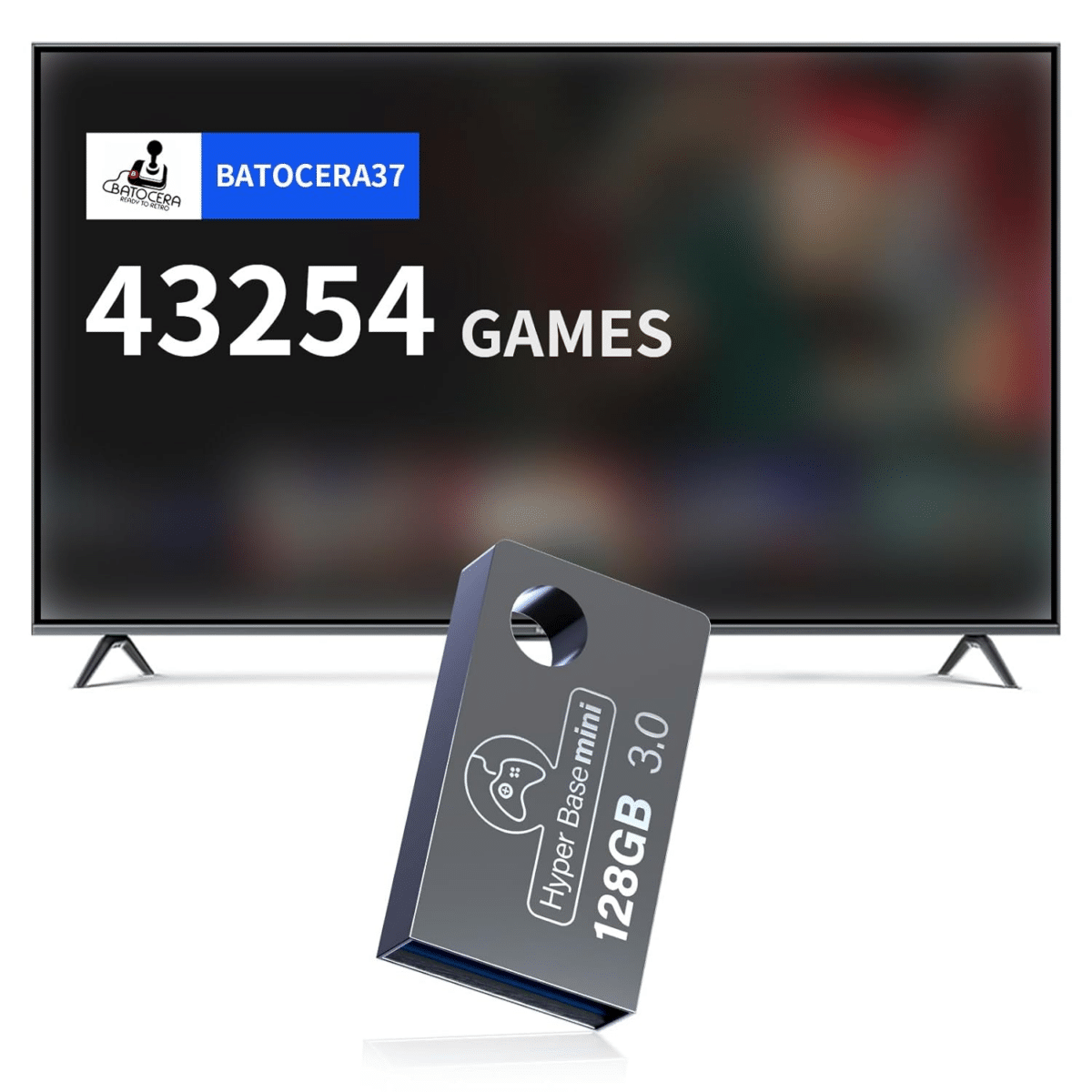
The HyperBase Mini Review drive was tested on various devices, including PCs, the Steam Deck, and newer Ryzen handhelds. While generally functional, some issues arose. For instance, handhelds with portrait displays experienced screen rotation problems, but these were fixable with adjustments within the system settings.
When it comes to performance, some systems like the Nintendo 64 (N64) are set to run at a lower resolution by default. This choice is likely intended to maintain compatibility with less powerful hardware. Users with more robust systems can manually tweak settings to improve graphics quality. While this adaptability is a strength, the need for manual adjustment might deter beginners looking for a true plug-and-play experience.
Pros
1. Convenience:
The HyperBase Mini comes pre-loaded with thousands of games, complete with box art and system logos. For those not keen on building their own library from scratch, this ready-made solution can save a significant amount of time and effort.
2. Ease of Use:
Once set up, the drive provides a plug-and-play experience. Mapping a controller is the only requirement, making it accessible to users of all skill levels.
3. Versatile Compatibility:
The drive works on various devices, including PCs, Steam Decks, and other handheld consoles. This cross-compatibility adds value, particularly for gamers who use multiple systems.
Cons
1. Outdated Software:
The drive comes pre-installed with an older version of Batocera (version 35). Upgrading to a newer version, like Batocera 37, reveals another issue: limited free space. The lack of room on the drive makes updating cumbersome, especially since deleting games might be necessary.

2. System Padding:
Many systems feature only a single game, seemingly included just to inflate the number of supported platforms. This padding dilutes the drive’s overall value, especially for users expecting more extensive libraries.
3. Poor Game Selection:
Despite the drive’s claim of 43,000 games, some systems, such as the PlayStation 1 (PS1), lack popular and beloved titles. Instead, these libraries are filled with less-known or less-desired games, potentially disappointing fans of specific franchises.
4. Legality:
The legality of the HyperBase Mini is questionable, as it comes pre-loaded with a massive collection of ROMs. These ROMs are likely unlicensed copies, making the product a potentially illegal purchase. Additionally, it appears to violate Batocera’s open-source license, which prohibits commercial distribution of their software.
Final Thoughts

The HyperBase Mini Review USB drive is a mixed bag. It offers a convenient, pre-configured retro gaming setup that can save hours for those not interested in building a custom collection. The plug-and-play nature and cross-device compatibility make it appealing to beginners or those who want to quickly dive into retro gaming. However, its outdated software, uneven game libraries, and questionable legality cast a shadow over its overall value.
For newcomers, the $40 price point might justify the convenience of having everything pre-installed and configured, even with the potential ethical concerns. Experienced users, however, might prefer to create their own drives, curating libraries with high-quality, properly licensed ROMs, and using the latest software.
Recommendation: The HyperBase Mini can be a reasonable choice for casual gamers seeking quick access to retro gaming without the hassle of manual setup. However, prospective buyers should weigh the legality, software limitations, and game selection quality before making a purchase.
Have questions about specific details or want to delve into particular parts of the drive? Feel free to reach out!